

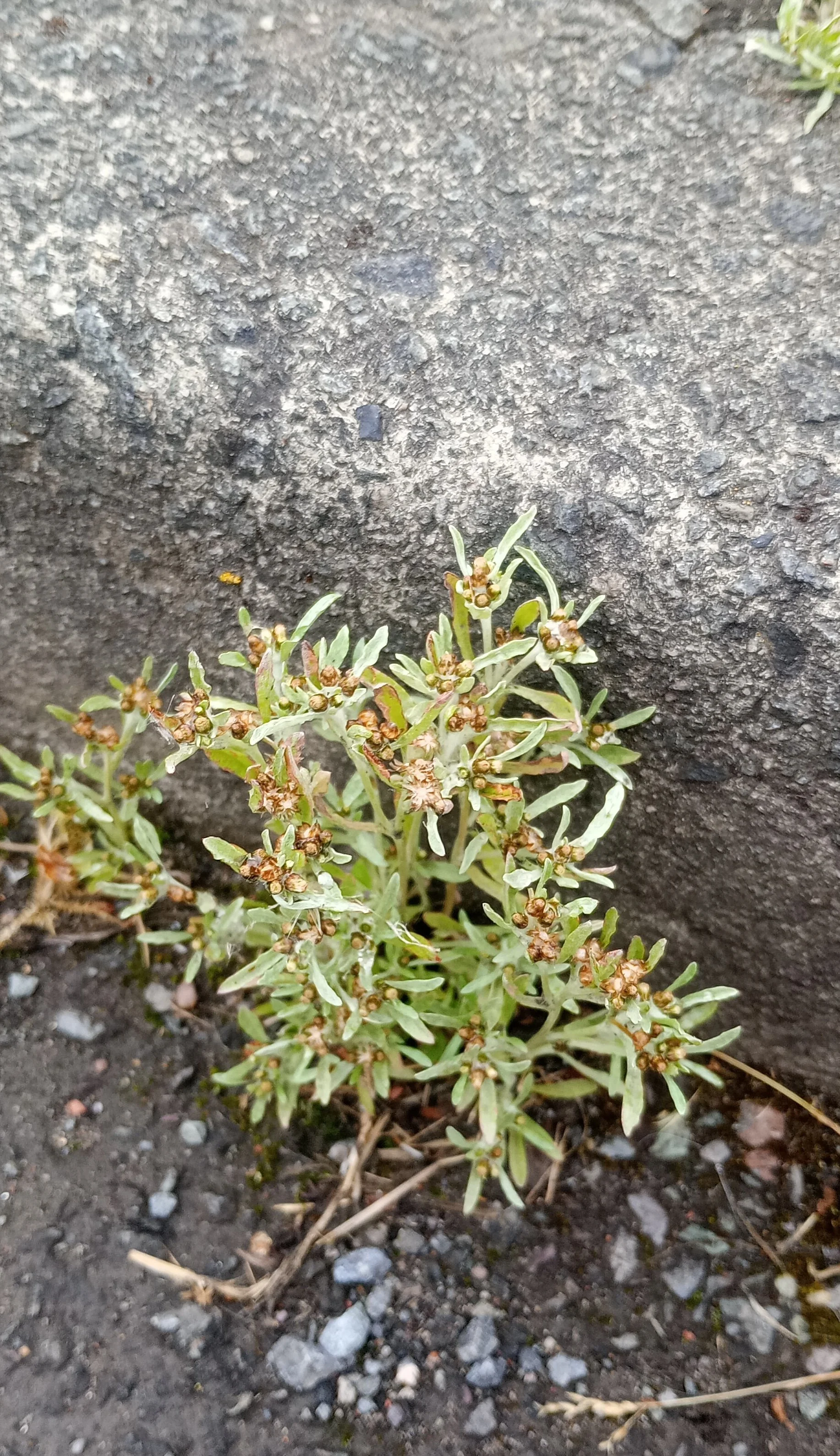
In a gutter, a common place to find this plant.
Gnaphalium uliginosum NS6555 3Jul26 JR
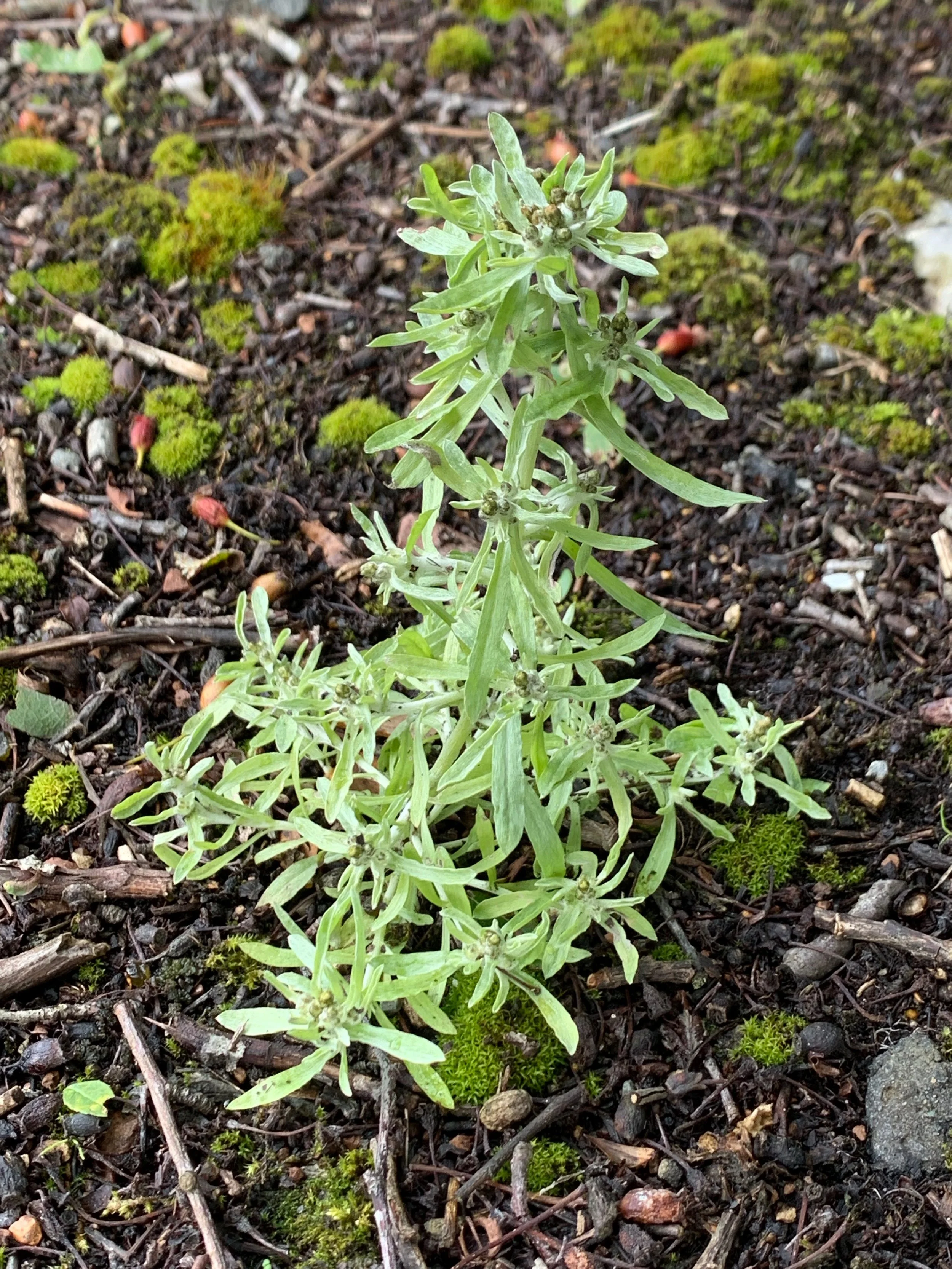
Gnaphalium uliginosum NS6451 18Aug19
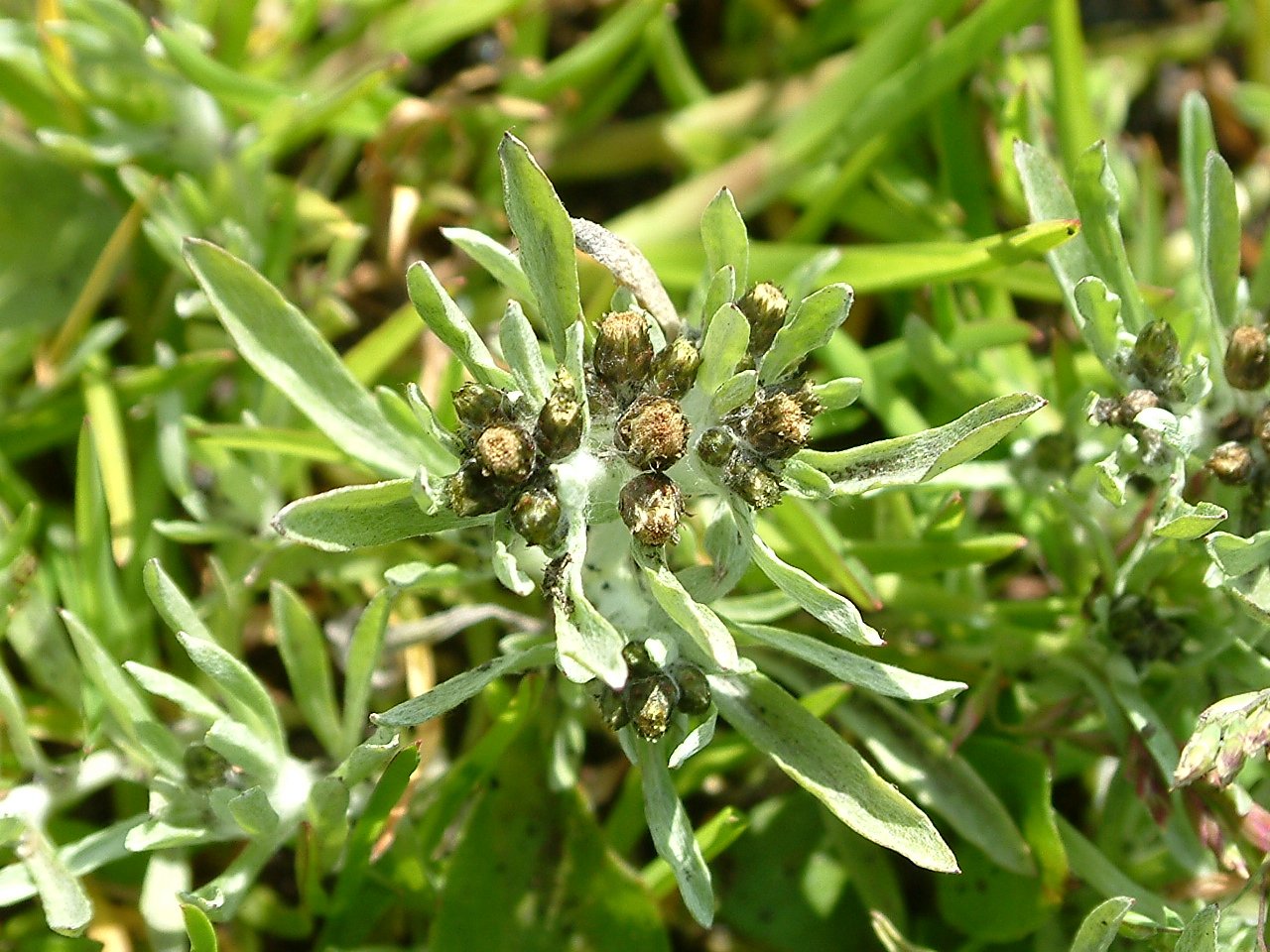
Gnaphalium uliginosum NT0255 18Jul04 FM
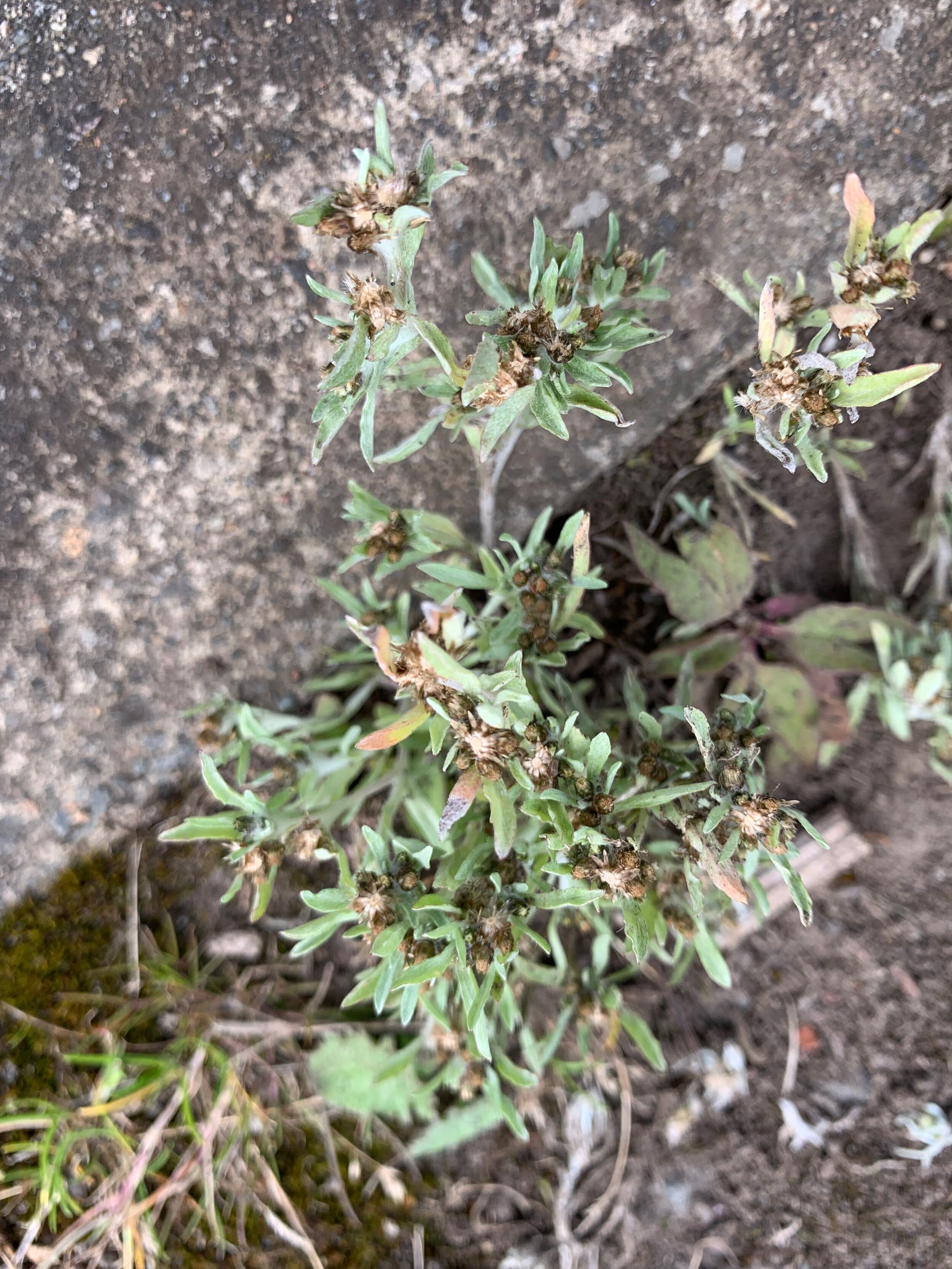
Gnaphalium uliginosum NS7951 20July2020 PW

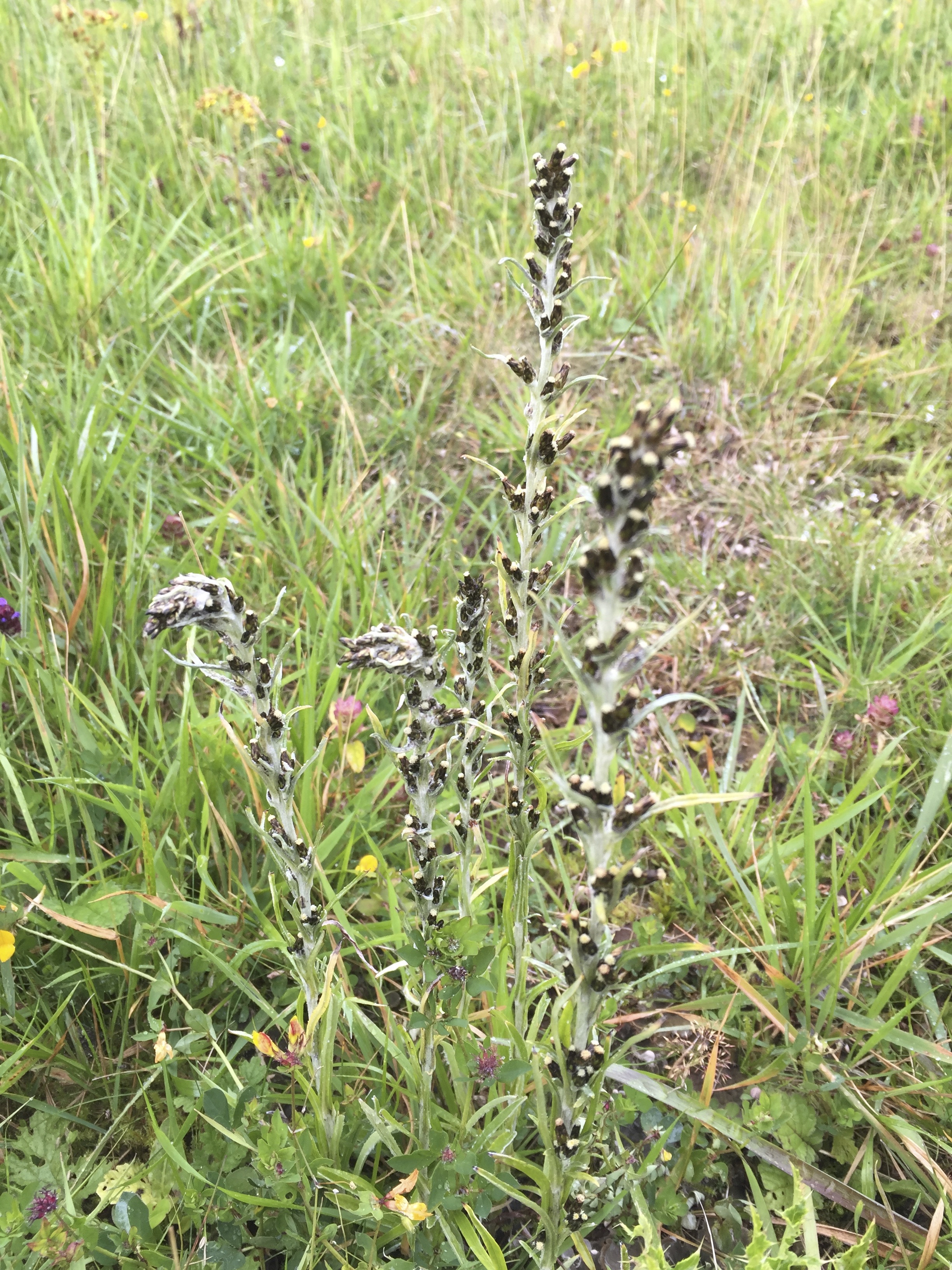
Gnaphalium sylvaticum 10Aug2016 NS9709 MP

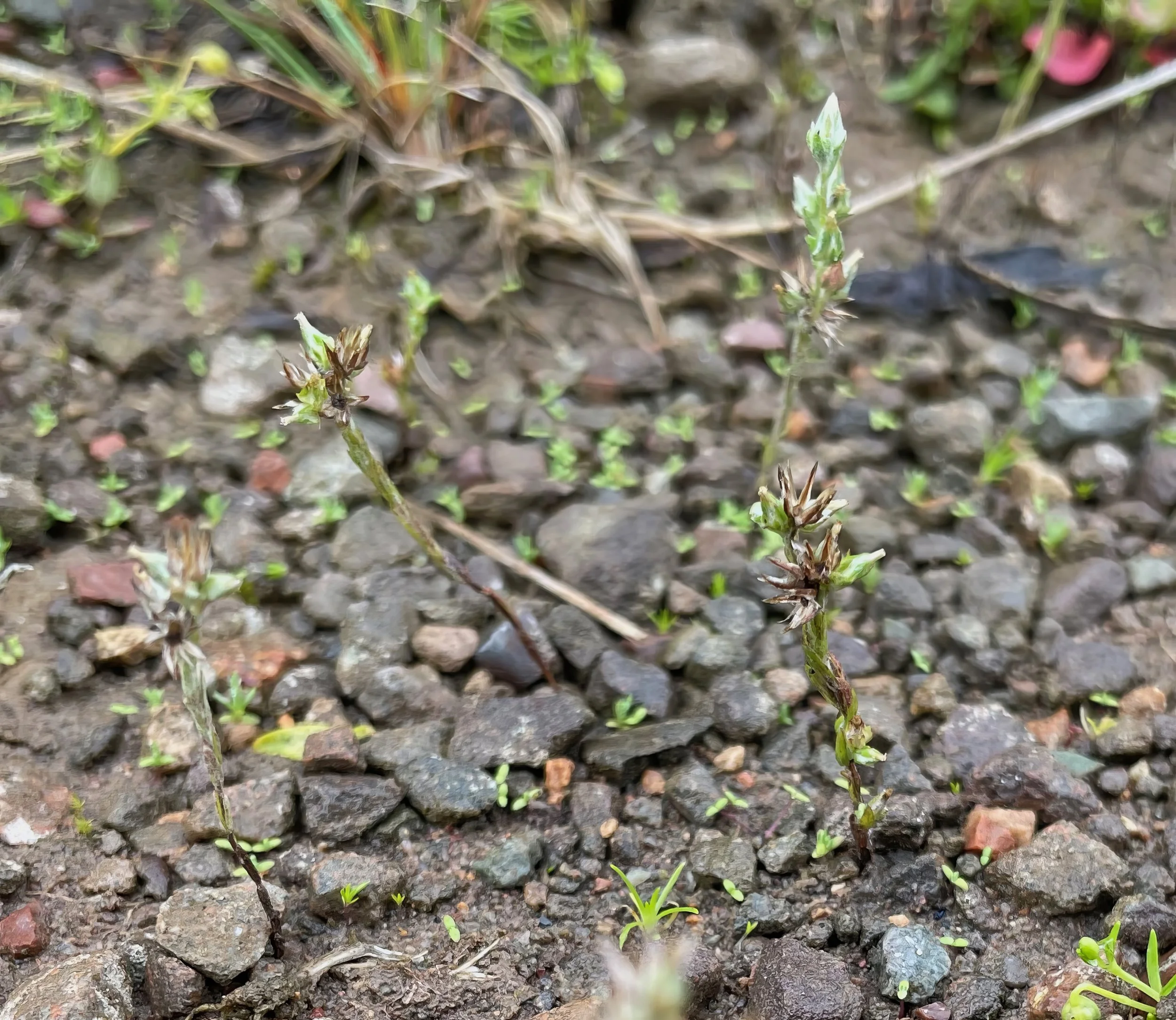
Has been described as looking as if it has been in a pencil sharpener!
Logfia minima NS8441 12 Aug23 PW
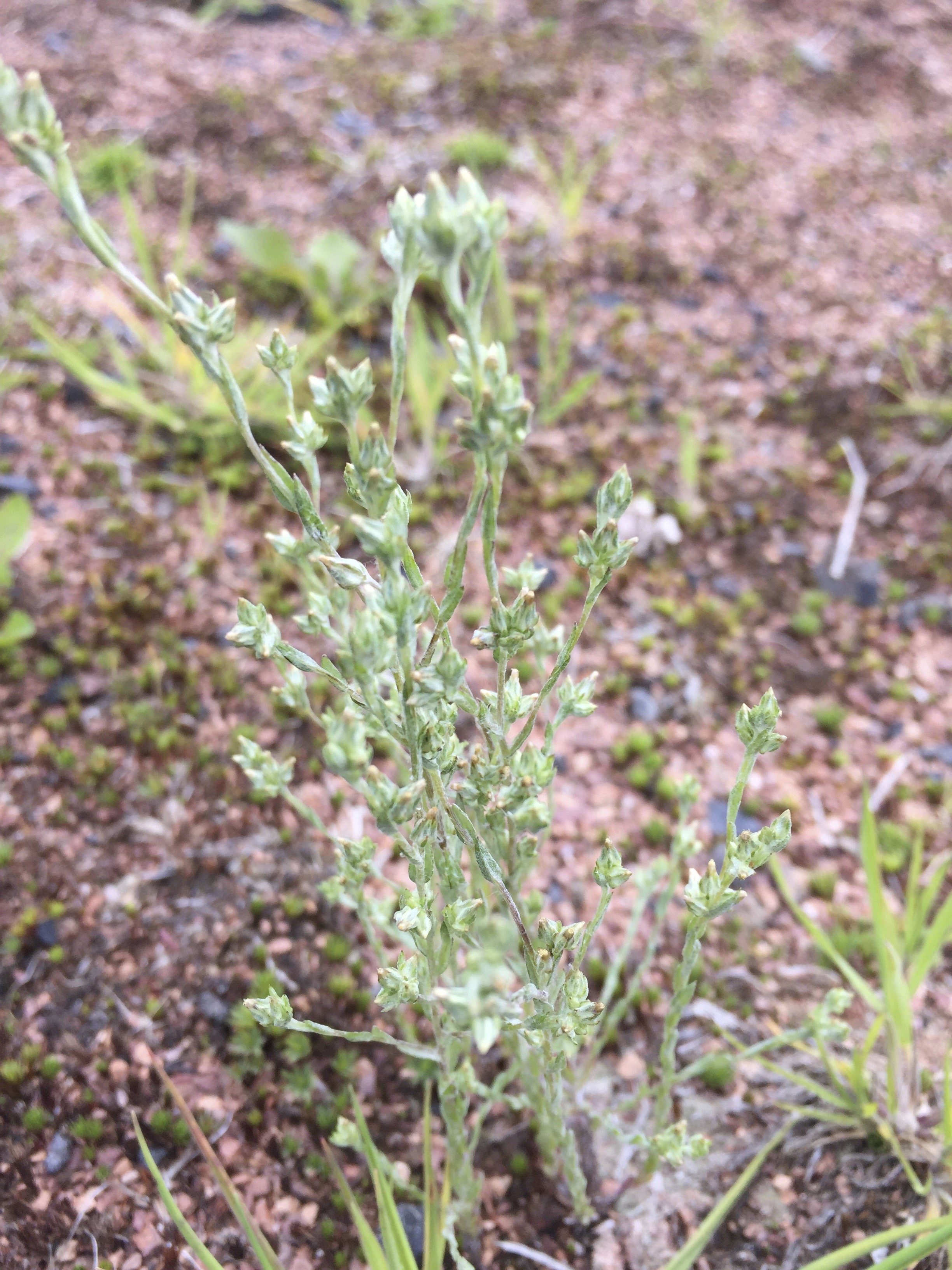
It can be quite branched as well.
Logfia minima NS9353 3Jul17 MP
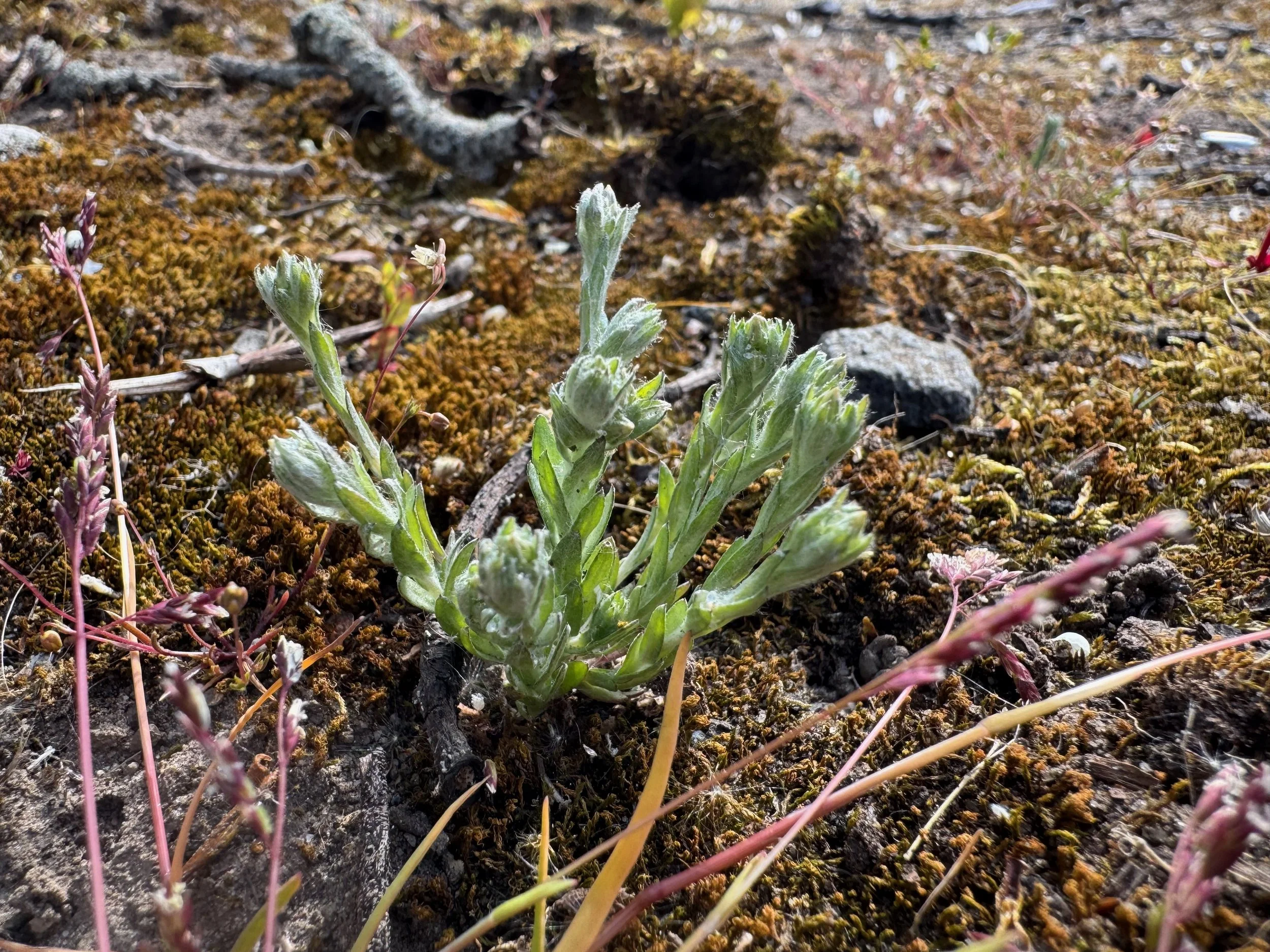
Logfia minima NS7360 12May25 PW

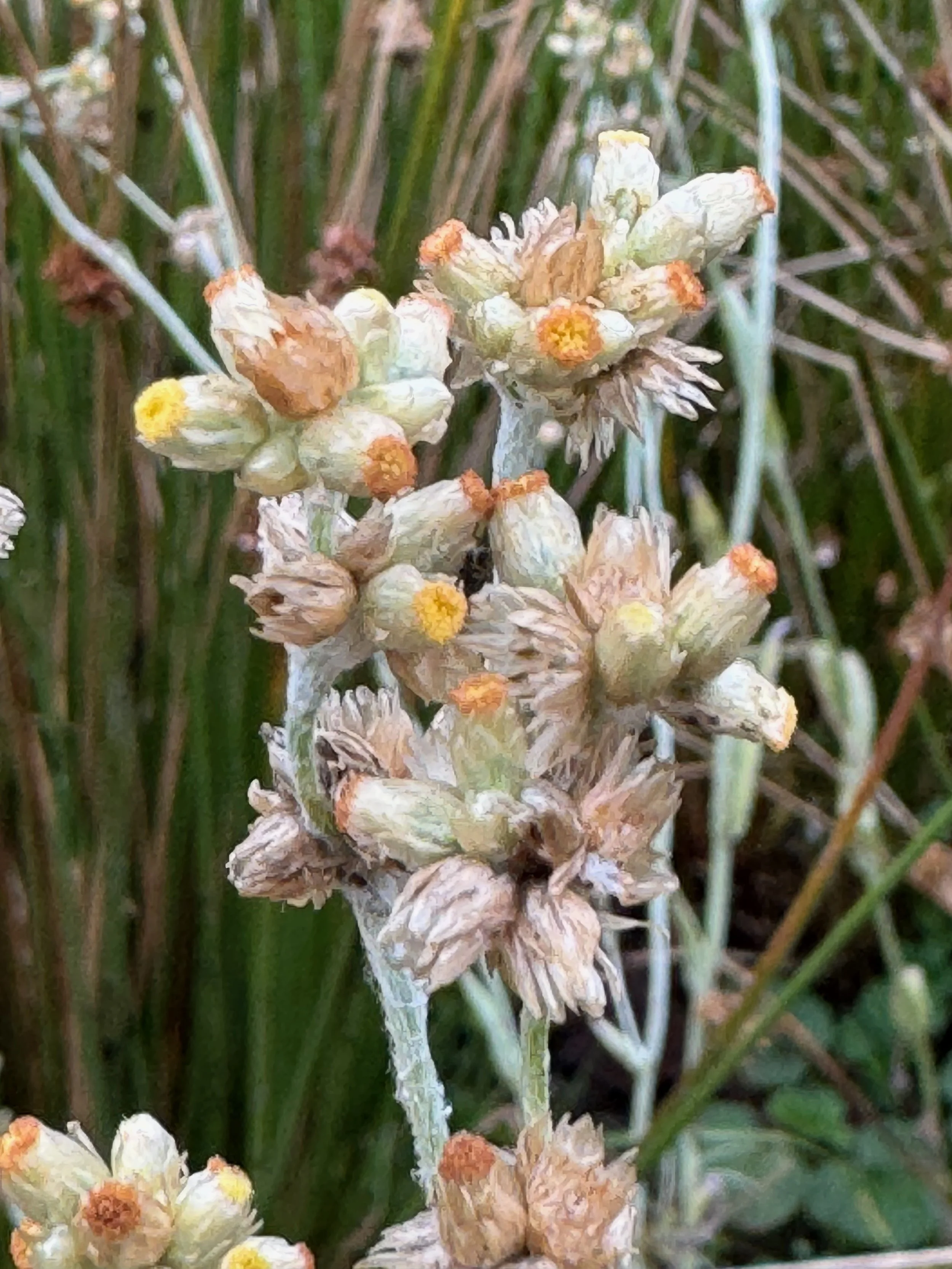
Laphangium luteoalbum NS6862 14Oct25 PW
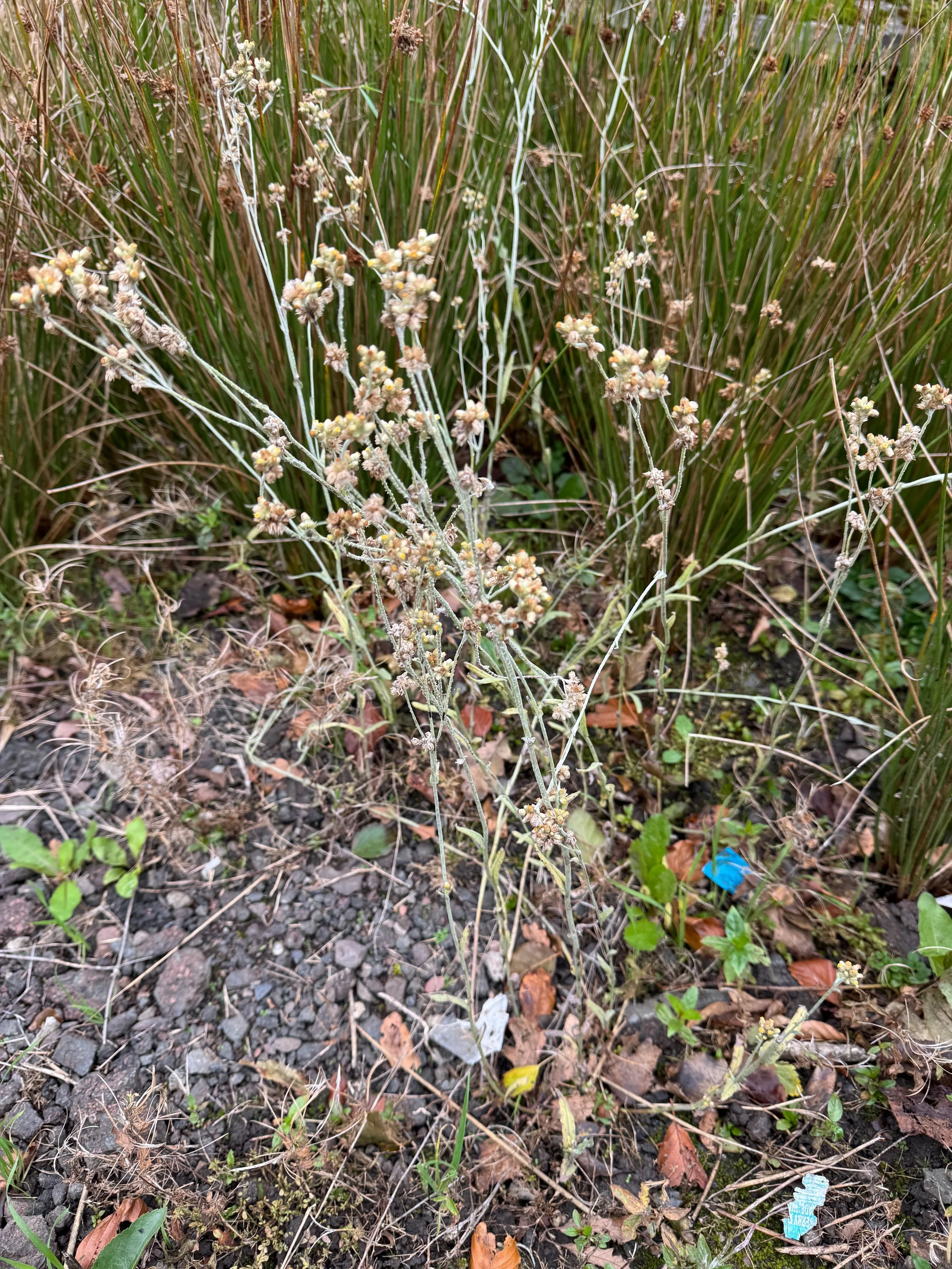
Laphangium luteoalbum NS6862 14Oct25 PW
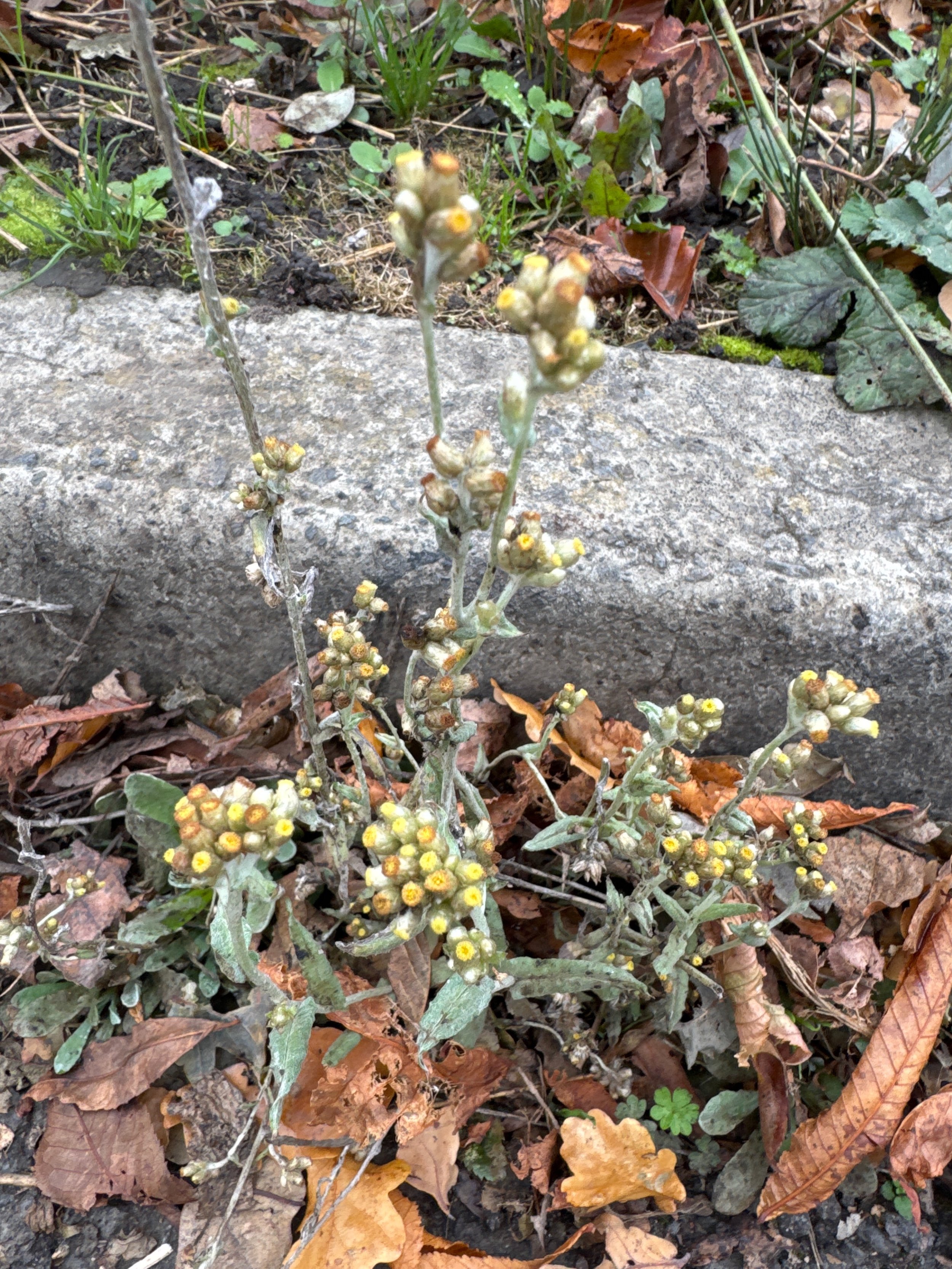
Laphangium luteoalbum NS6862 14Oct25 PW
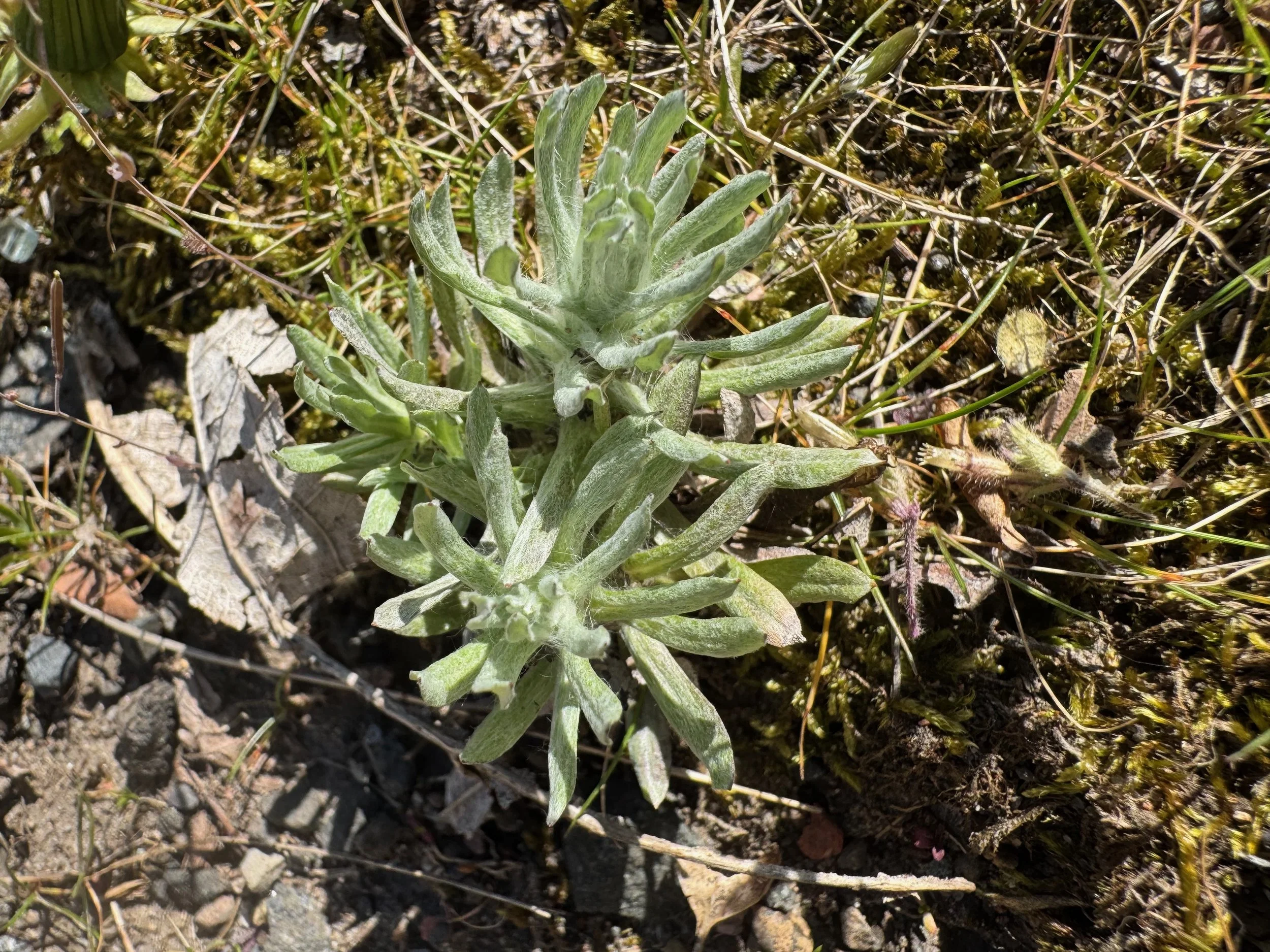
Laphangium luteoalbum NS6562 10Apr25 PW
Gnaphalium species - Cudweeds
Cudweeds are members of the large Asteraceae (Compositae) family. They look similar, reminiscent of a hairy Groundsel without the yellow. Previously they were separated into Filago and Gnaphalium, but Filago has been split into Lofiga and Filago (incidentally anagrams) and Gnaphalium, into Laphangium, Pseudognaphalium, Omalotheca and Gamochaeta.
Gnaphalium uliginosum - Marsh Cudweed This is a common annual plant of damper waste ground and gutters. It is much branched from low down and smaller (4-20cm). The leaves are woolly upper side and the phyllaries are ;light brown with dark tips. .
Omalotheca (Gnaphalium) sylvaticum - Heath Cudweed This perennial is less common and taller (8-60cm) than G. uliginosum and the leaves are green on the upper side. They are woolly below and reduce in size up the stem. The phyllaries are green in the centre with a brownish scarious border.
Logfia minima Small Cudweed is a small annual to 25cm, but often much smaller. It has hairy leaves and stems, The leaves do not overtop the inflorescence of 2-8 flowerhead surrounded by brown phyllaries. It is found on the bases of wind turbines and similar gravelly or bare sandy areas.
Laphangium luteoalbum Jersey Cudweed This annual is becoming more frequent in waste areas and bare sandy areas and is certainly not very rare as described in Stace. It is covered in whitish wooly hairs and tall, to 50cm. It has a leafless terminal inflorescence with yellowish-white phyllaries with scarious borders in several rows.